

Evaluating Programme Effectiveness & Impact
Assessing the EKYAN model's effectiveness in delivering livelihood, behavioural, environmental, and systems-level outcomes across key stakeholder groups.
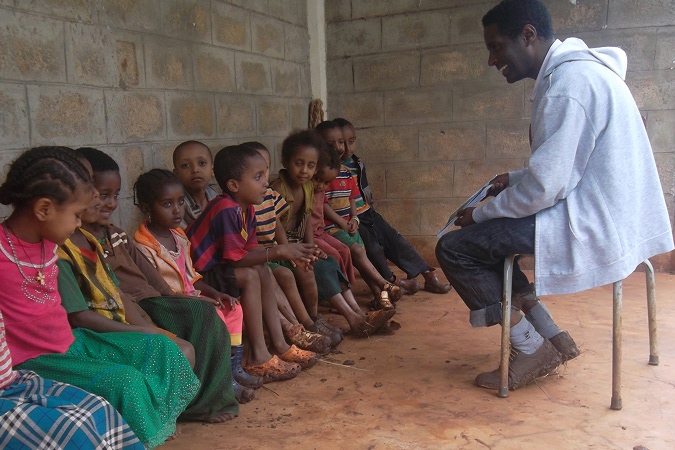
The EKYAN programme partners with the government and organisations, including Kuza Biashara, SNV, and the World Bank, to equip young people with skills in agribusiness, climate-smart agriculture, and nutrition through digital learning platforms.
Operating across four pillars—agripreneurs, farmers, students, and systems—the programme aims to strengthen livelihoods, promote sustainable agriculture, and build more resilient food systems.
Assessing the EKYAN model's effectiveness in delivering livelihood, behavioural, environmental, and systems-level outcomes across key stakeholder groups.
Examining how different elements of the Kuza Biashara implementation model have contributed to changes in income, productivity, employment, youth aspirations, adoption of regenerative agriculture, and food system resilience.
Identifying contribution pathways and lessons to strengthen future programme design, implementation, and scaling.
Farmers reached through programme interventions.
Agripreneurs supported to strengthen agribusiness skills and opportunities.
Students engaged through digital learning platforms and school-based activities.
Centres of Excellence established to strengthen agricultural skills development and innovation.

The project aims to strengthen the evidence ecosystem underpinning the strategy, enabling strategic learning, coordination, and impact at scale while informing adaptive management and evidence-based decision-making.
Read More
The project supports climate adaptation in agriculture and food security systems across Africa and South Asia through Digital Climate Advisory Services (DCAS) and climate-resilient seeds.
Read More
The project supported South-South cooperation between India and Africa to accelerate Inclusive Agriculture Transformation (IAT) by strengthening agricultural resilience, facilitating knowledge and technology transfer,
Read More